


Send Message
Privacy statement: Your privacy is very important to Us. Our company promises not to disclose your personal information to any external company with out your explicit permission.


Security autonomous robots represent the next generation of intelligent surveillance and patrol systems. Unlike traditional static cameras or manual patrols, these mobile platforms utilize advanced sensors, AI-driven navigation, and real-time data processing to provide dynamic security coverage for industrial parks, commercial districts, and critical infrastructure.
By integrating thermal management and robust electronic control systems, modern autonomous robots ensure consistent performance in varying environmental conditions. This technology reduces labor costs while increasing response times and situational awareness for facility managers.
Key Benefit: Deploying autonomous security robots allows organizations to scale their security operations without a linear increase in headcount, providing 24/7 reliable coverage that adapts to threats in real-time.
The core value proposition lies in mobility and intelligence. These robots can navigate complex terrains, identify anomalies through computer vision, and transmit live feeds to command centers. They are particularly effective in large-scale facilities where human patrols leave blind spots due to fatigue or limited range.
Building reliable security autonomous robots requires manufacturing precision comparable to automotive standards. Our production facilities utilize rigorous quality control protocols, ensuring that every component—from chassis integrity to sensor calibration—meets stringent durability requirements.
We employ computer-aided engineering (CAE) and computational fluid dynamics (CFD) simulations during the design phase. This allows us to optimize thermal management and structural weight before physical prototyping, significantly reducing development cycles and ensuring cost-effective production.
Buyer Advantage: Sourcing from manufacturers with established automotive-grade production lines ensures that your security robots are built to withstand harsh outdoor environments, minimizing downtime and maintenance costs over the asset's lifecycle.
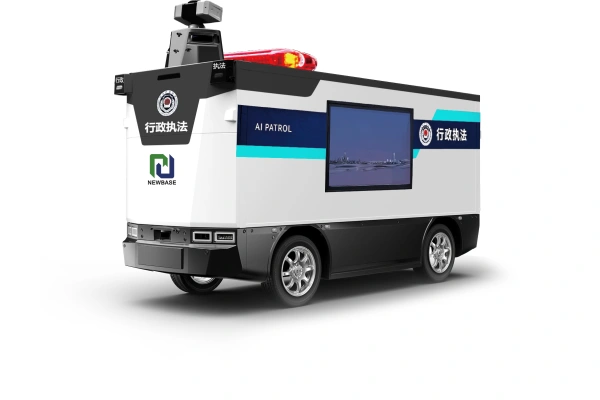
Selecting the optimal autonomous security robot involves evaluating technical specifications against your specific operational environment. Key factors include navigation accuracy, battery endurance, sensor payload capacity, and integration capabilities with existing security infrastructure.
Ensure the robot utilizes LiDAR and visual SLAM for precise mapping. Verify its ability to handle stairs, slopes, and uneven surfaces common in industrial sites.
Robots operating outdoors require robust thermal regulation. Look for systems with IP67 ratings and active cooling/heating to protect sensitive electronics in extreme weather.
The platform should support open APIs for seamless integration with VMS (Video Management Systems) and access control networks, allowing centralized fleet management.
Before finalizing a procurement decision, verify that the supplier meets the following critical criteria to mitigate risk and ensure long-term operational success.
Procuring autonomous security robots often presents challenges related to integration, reliability, and regulatory compliance. Understanding these common pitfalls helps buyers negotiate better terms and select more suitable solutions.
In dense urban or industrial environments, Wi-Fi and cellular signals can be unstable, causing connection drops.
Solution: Choose robots equipped with multi-network redundancy (4G/5G + Wi-Fi + Local Mesh) to maintain connectivity.
Extreme temperatures can significantly reduce battery life and charging efficiency.
Solution: Select units with active thermal battery management systems that pre-condition the battery pack before operation.
AI algorithms may misidentify shadows or animals as threats, leading to alert fatigue.
Solution: Opt for vendors offering customizable AI training datasets specific to your site's environment.
New robots often fail to communicate with legacy security software.
Solution: Require standardized API documentation and middleware support from the manufacturer prior to purchase.
Security autonomous robots are versatile assets deployed across various sectors requiring high-level surveillance and rapid response capabilities.
Patrol large perimeters, monitor unauthorized access to warehouses, and track vehicle movements in busy logistics hubs.
Enhance public safety in parks, plazas, and transit stations by providing visible deterrence and real-time incident reporting.
Monitor remote or hazardous construction zones where human access is risky, detecting theft of materials or equipment.
Manage access control, deliver packages, and conduct routine night patrols on university or corporate grounds.
Inspect power substations and refineries using thermal cameras to detect overheating equipment or gas leaks.
Assist in loss prevention by monitoring blind spots and interacting with customers for directions or assistance.
When selecting a partner for security autonomous robots, prioritize suppliers with proven expertise in automotive-grade electronics and thermal management. The following criteria define an ideal supplier profile:
Get answers to the most common questions regarding the deployment, maintenance, and capabilities of security autonomous robots.
Standard models offer 8-12 hours of continuous operation on a single charge. For 24/7 deployments, many providers offer automated docking stations with hot-swappable battery systems, allowing the robot to recharge instantly while another unit takes over the patrol route.
Yes, high-quality security robots are rated IP65 or higher, meaning they are protected against dust ingress and low-pressure water jets. However, extreme weather conditions like heavy blizzards or flooding may temporarily limit functionality. Always check the specific IP rating and operating temperature range provided by the manufacturer.
Most modern robots support ONVIF and RTSP protocols, allowing them to stream video directly into existing Video Management Systems (VMS). They can also act as mobile PTZ (Pan-Tilt-Zoom) cameras, providing dynamic angles that fixed cameras cannot achieve.
Absolutely. These robots are equipped with multiple layers of safety sensors, including LiDAR, ultrasonic sensors, and bumpers. They automatically stop or reroute when approaching humans or obstacles. Many also feature audible and visual alerts to announce their presence before making contact.
Lead times vary based on configuration and order volume. Standard configurations typically ship within 4-8 weeks. Customized solutions involving specific sensor payloads or software integrations may require 12-16 weeks for production and testing.
Privacy statement: Your privacy is very important to Us. Our company promises not to disclose your personal information to any external company with out your explicit permission.
Fill in more information so that we can get in touch with you faster
Privacy statement: Your privacy is very important to Us. Our company promises not to disclose your personal information to any external company with out your explicit permission.